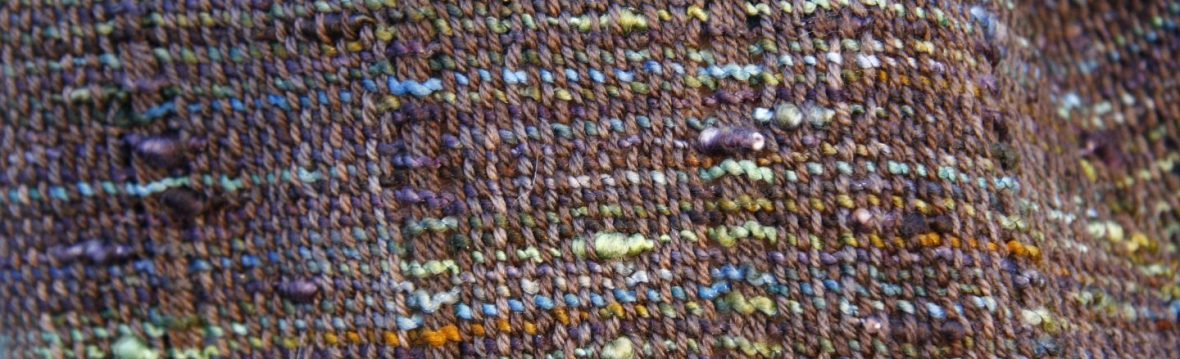
Soon after I started spinning, I knew I wanted to spin for sweaters. And I love natural colored wool, especially the silvers and grays. That spring (2015), I roadtripped with the hubs and 2 gals from my LYS to the Great Lakes Fiber Show in Wooster. If’ you’re within a few hours’ drive, you should go! It’s a great one!
While there, I was resigned to find a beautiful fleece. I found 3, naturally; a Border Leicester lamb, a BFLxLincoln ewe, and a Border Leicester ram. In my defense, I did split the 3rd one with a friend. Sharing is caring, after all – and the price was TOO GOOD to pass up. I happily sent them all the to mill to be washed & prepared and waited patiently to pick them up in the fall, ready to be spun.
The challenge was that I had requested pin-drafted roving, but apparently that machine was down, so I just got regular roving. With my longwool fleeces. So that was a bit disappointing.
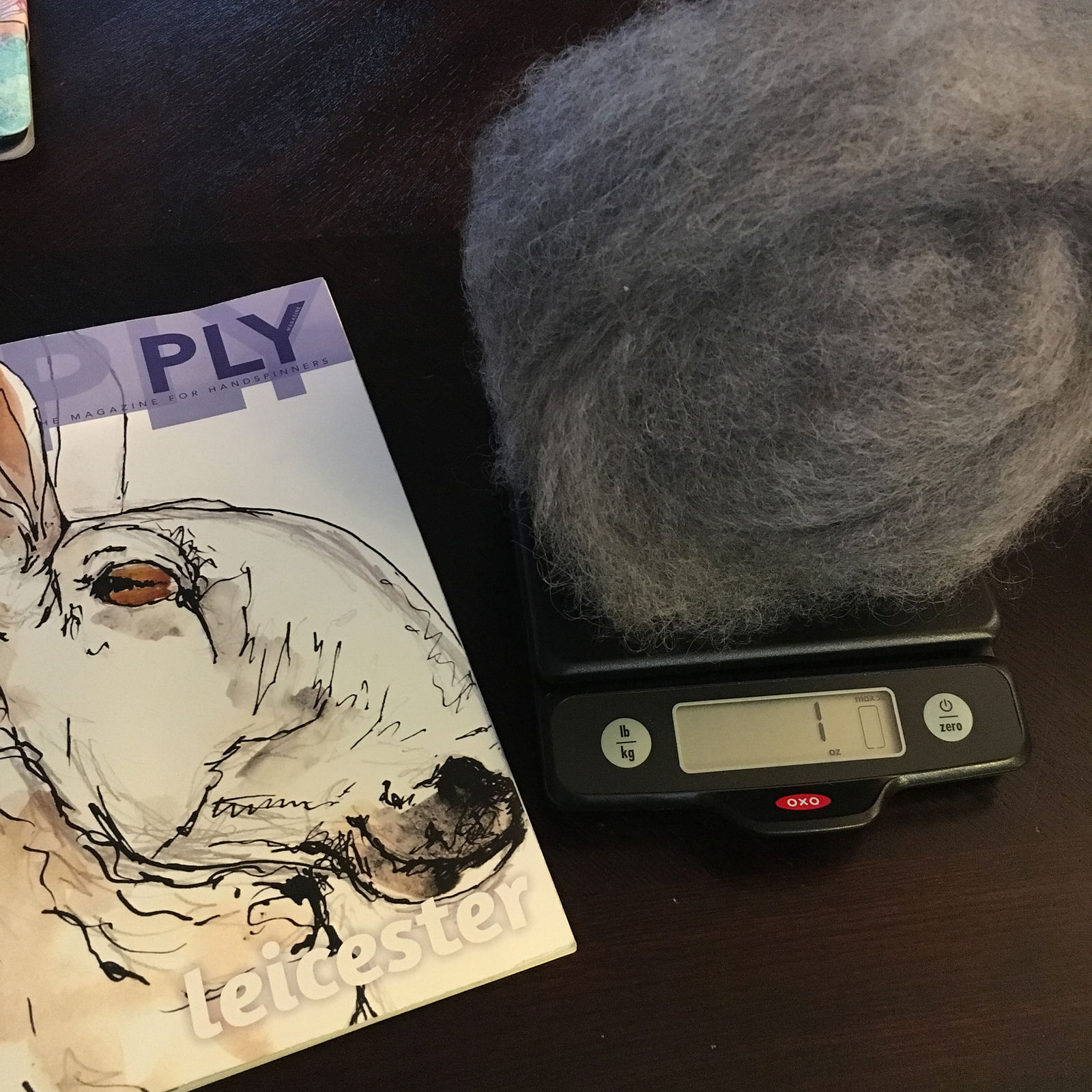
Now, I have pounds and pounds of wool, in a less-than-optimal preparation for the wool, and the wrong prep for how I tend to spin. Armed with my Leicester issue of PLY and half a HUGE ram fleece, I set out to learn what these sheep with the hard-to-pronounce and harder-to-spell name were all about.
So, I sampled different ways to spin this wool into something usable and hopefully, wearable. I tried a long draw and a short, forward draw, both aiming for fingering-sized singles.
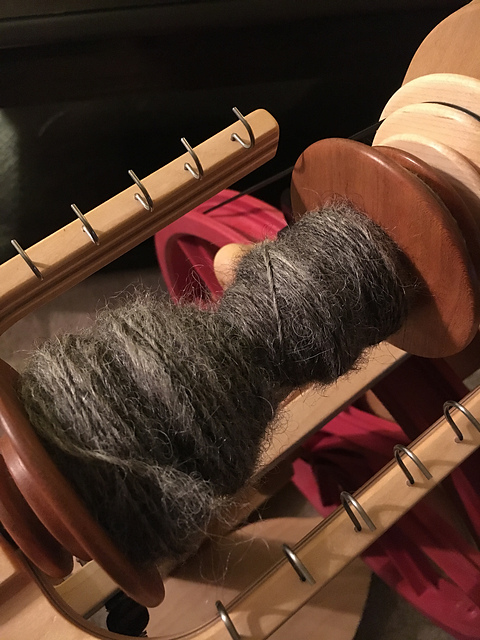 |
| Long draw toward the front of the bobbin; short draw toward the back. |
I spun ~15 gr of each, then wound off to divide up each to ply.
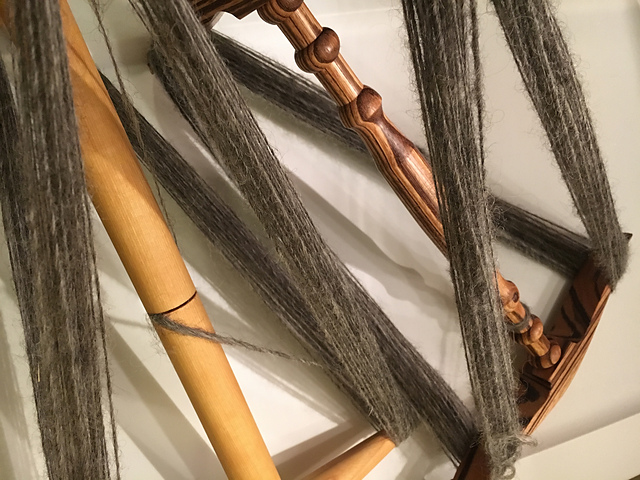
I spun the singles at the same ratio, then dropped down one to ply. As always happens, I had a few yards of singles left after plying, so I kept those for reference.
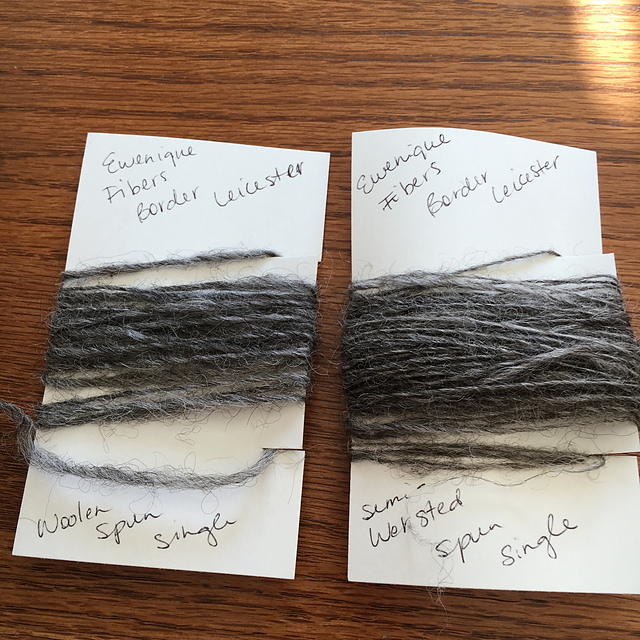
As you can see, there is a fuzziness (or halo) to both singles yarns, but more so on the woolen sample (left).
I washed both 3-ply yarns and compared them.
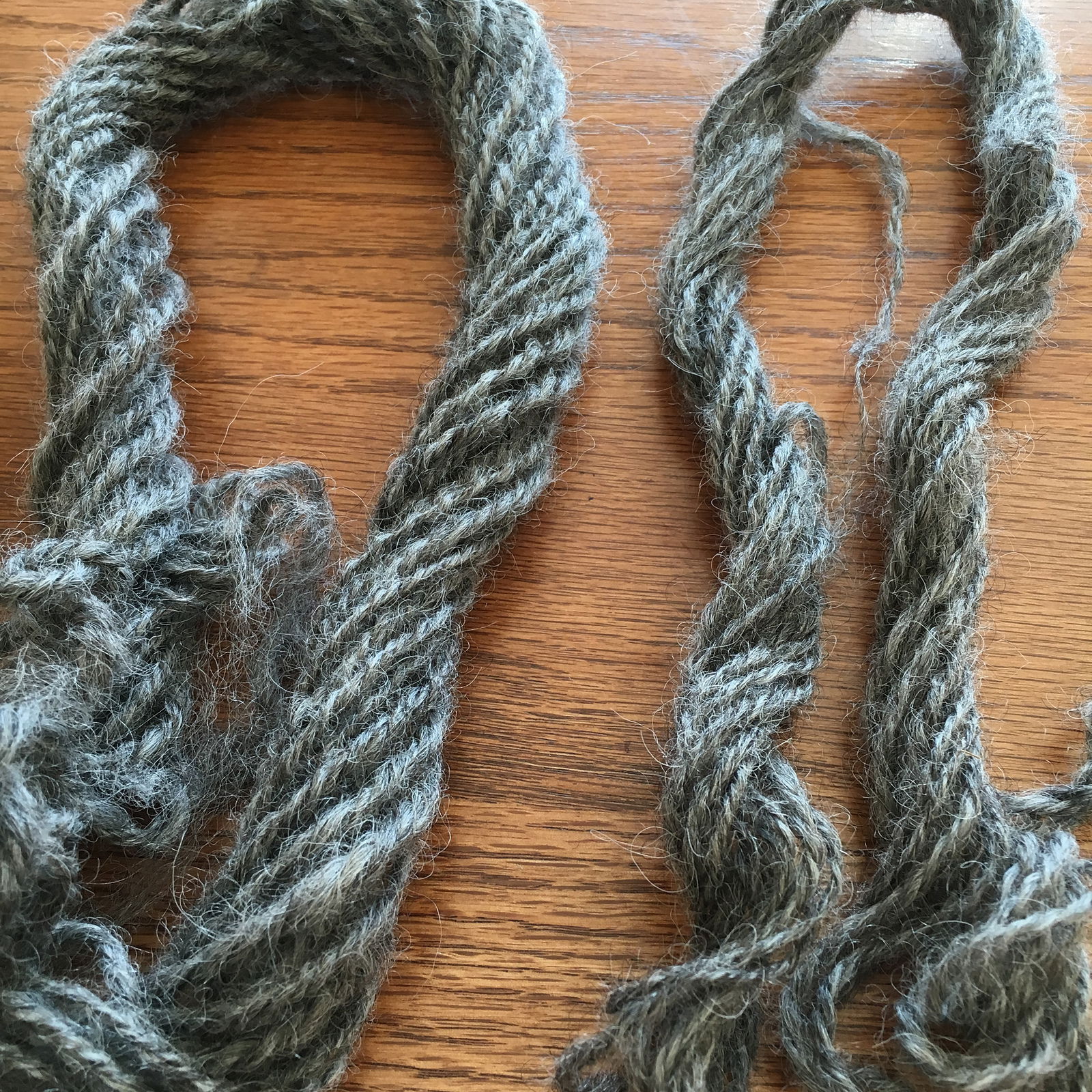
I am drawn to the fluffy nature of the woolen (L), but the fuzz translates into itchiness and lately, my neck just won’t tolerate that. The worsted sample (R) has lovely drape, even in the skein, but could be HEAVY, substantial yarn in a garment. Not sure how I wanted to proceed, I set it aside. Kindly, it waited for me.
In the meantime, I took a class with the lovely Kate Larson, who has her own flock of Border Leicester sheep. At the end of the second class, she had time for people to ask questions about anything wool related, so I asked her what her MO was for spinning BL. She told me that likely the fuzziness I got was partially from the thickness of the singles and she prefers to spin fine singles and then ply up to the finished weight she wants for the yarn (i.e. – instead of 3 thicker singles like I had tried, try fine singles & use 5 or 6 to create a plyed yarn of the same thickness).
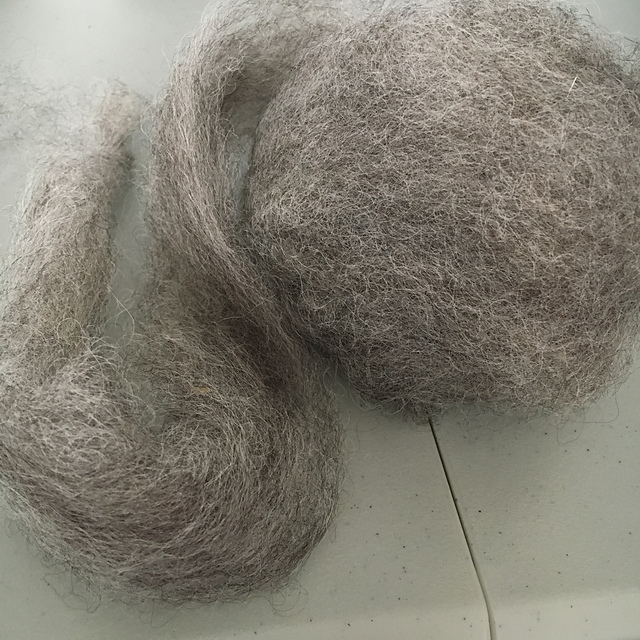
Keeping that in mind, I started thinking about the prep again. Disorganized, fluffy roving isn’t really what this fiber wants to be. And not really helping the spinning flow. I asked the hive mind in a spinning group on Facebook how to best deal with this challenge. A helpful gal named Kelly suggested I try aggressively pre-drafting the fibers to try to get them to fall into better alignment. Since this didn’t require equipment I didn’t have access to at the time, I went for it. I kept my singles fine, keeping Kate’s advice in mind.
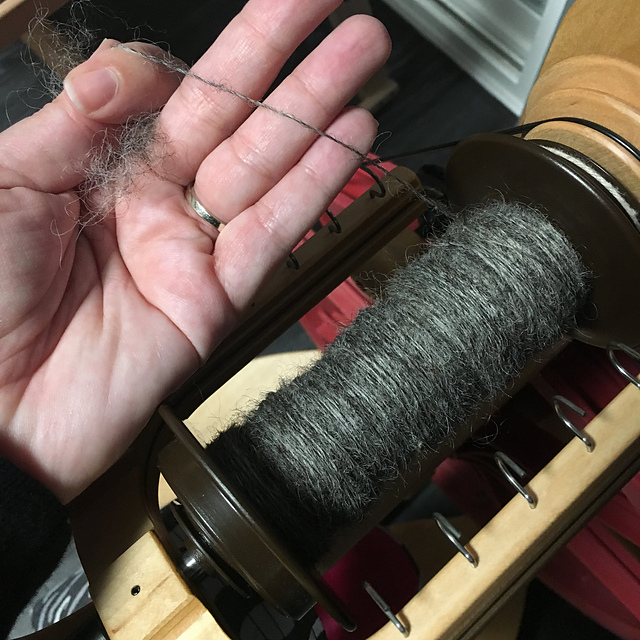
As you can see, the halo was GREATLY reduced on these singles.

 Donita Westman