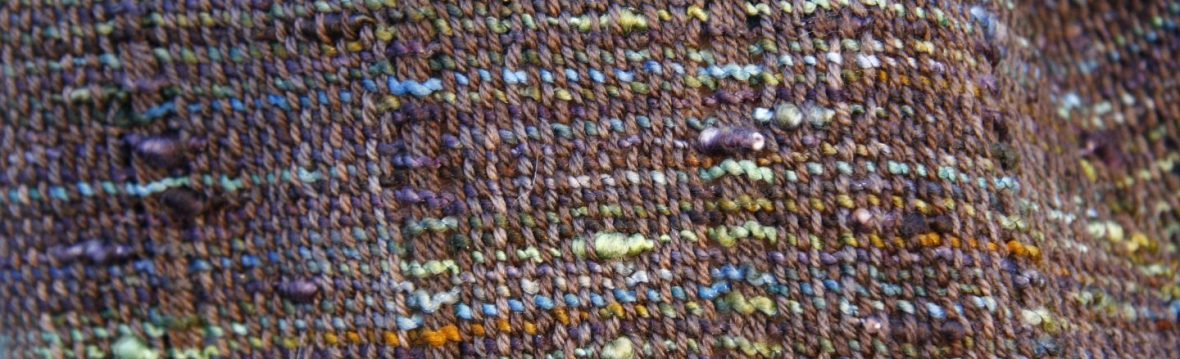
It’s no secret: I love wool. I love soft wool, I love toothy wool, I love the texture of wool, I love working with wool. Sometimes, I even love the smell of it. I love the feel of lanolin on my hands after rubbing on a sweet sheepy face.
But, as we all know, sheep are prone to rub themselves all over some less than savory things. Since the best wool comes from their bodies, they tend to get a bit… well…. gross. Some sheep are more gross (grosser? That can’t be right…) than others. Some just love burying their faces in the hay trough back to their shoulder blades. Some sheep love to roll in weeds. And since they live outside, sheep get dirty. And hey, everybody poops.
Regardless of all the gross factors above, fleeces sing a siren song most spinners are powerless to resist. The tables of raw fleeces at wool shows draw you in, singing soft melodies of all the potential of these pounds of wool. Some melodies are dancing, bouncy melodies, their fine crimp giggling at you, enticing you to come closer; other melodies are slower, shining melancholy melodies with beautiful locks of waves from a long wool breed waiting for your admiration. Some even sing their own counterpoint, as natural colored locks hint at the depth of color in your finished yarn. In a word, irresistible.
Speaking of singing, it’s important to test any raw fleece you are considering for purchase for breaks or brittle fibers. This guide to wool assessment from Shaltz Farm is a good one and describes how I ping locks to check for sound lock structure. A fleece with a break in it isn’t necessarily a deal breaker, but it will change the way you can handle and spin with that wool. I hear the ping like a plucked string on a string instrument (violin, viola, guitar). It will have a tone to it and a little ring. If upon repeated snaps, the ring changes tone or gets less audible or goes away completely, there is a break in the fiber. In a long staple fleece, you may be able to work around that break. In a short staple fiber, handspinning may not be the best path for a fleece with a break in it. Judith MacKenzie addresses this far better than I ever could in her DVD Three Bags Full – definitely check it out.
It is also important to know what type of fleece you are buying and the characteristics of that fleece before you buy. Definitely grab a copy of The Field Guide to Fleece to throw into your festival bag. It’s small and worth the extra few ounces!
 |
| A raw fleece I purchased online from a shepherd. Buying fleece online is a bit of a gamble, but this one was a winner! |
Raw fleeces are fleeces that have been shorn from the sheep, collected and, usually dumped rather unceremoniously into a trash bag for storage & transport. Raw fleece will still have all the grease the sheep produced while growing it, as well as VM and anything that stuck to the grease or wool. Raw fleeces usually contain vegetable matter, also known as VM: bits of straw, grass, seeds, burrs, etc. They can also contain leg and belly wool (less desirable for handspinners, as it is lower quality), which are also usually high in VM. They can also contain ‘tags’, from the phrase ‘tag end’; tags are found on the back end of a sheep and all the business that goes on there. ew
When looking at a raw fleece, it is important to determine if it has been skirted. Skirting is a process where the least desirable wool has been removed and discarded. A skirted raw fleece should not contain ANY tags whatsoever; a ‘lightly skirted’ fleece can mean that only tags have been removed. Some shepherds also remove leg and belly wool as well; they may refer to this as a skirted fleece or a well-skirted fleece. Interpretation is open to the shepherd, so be sure talk to the shepherd, ask questions about how aggressively they skirt and maybe ask to open up a raw fleece and look at it yourself. This can help you assess the whole fleece and decide on the value of the asking price per pound. Everybody poops, but you don’t want to pay for that by the pound…
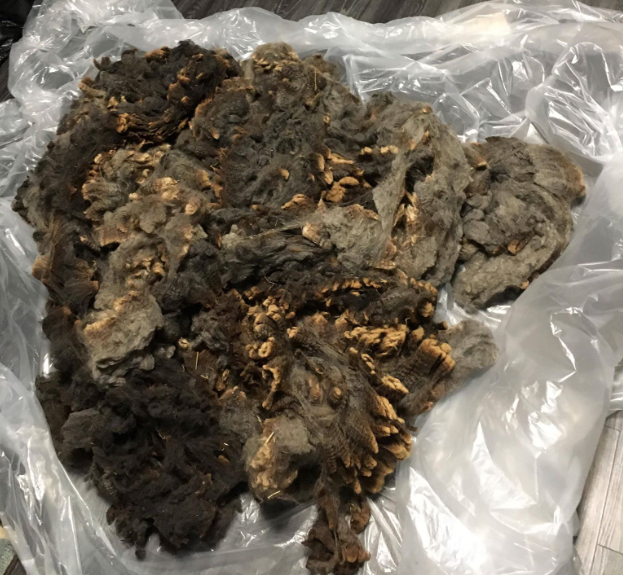
When I get a raw fleece home, I like to lay out a plastic drop cloth like these and spread the fleece out on top. You never know what will shake out and it’s nice to have something to protect your floor! I spread out the fleece and if it has stayed together well, try to orient the blanket into a quasi-sheep shape. While the fleece is spread out on the floor, look for areas of wool you might not want to spin. There’s nothing wrong with separating your fleece into ‘firsts’ and ‘seconds’. Just because it isn’t something that would be nice next to your skin in a sweater or hat doesn’t mean it’s not worth using. Rugs need to be tough, not soft, so don’t forget about the possibility of corespinning that rough fleece into some sturdy rug yarn!
 |
| This monster fleece required a second skirting, but you can see how the ‘blanket’ held together as we unrolled it. This helped us skirt more efficiently. |
At this point, I do any additional skirting that may be needed and also grab up any second cuts (short bits cut by a second pass with the shearing blades that aren’t near the length of the rest of the fleece). Second cuts can be thrown into a separate bin for stuffing, quilt batting or to create nubs or tweedy bits on a drum carder, if you like. (If you plan to incorporate them into your spinning, be sure to wash them, too!)
I don’t know about you, but I don’t really want all that dirt and ahem other stuff on me, my lap, my bobbins or my wheel while I’m spinning. Some handspinners do choose to spin certain fleeces ‘in the grease’ and more power to them! There are a few sheep breeds that lend themselves to this, as they have low grease content in their fleece and the fleece is usually fairly clean, as the grease is what grabs onto the dirt. Most medium and fine fleeces tend to be greasy, and need some TLC before they are ready to be spun.
My next post will be about getting the gross out!
P.S. – another great post about the fermented suint method from Ask the Bellwether here.

 Donita Westman
1 thought on “How I buy all the fleeces!”