After I’ve selected & skirted a fleece, I usually wrap it up in the plastic drop cloth and store until I’m ready to wash. If there was a lot of VM that shook out, I will gather up the fleece into smaller bags and shake the VM off outside. Another thought about the VM – if it shook out easily when you opened up the fleece, it will likely shake out easily later, too. I usually gather up the plastic and put the fleece into a plastic tub that is stacking friendly, and where small animals can’t get into it. (I get it: it’s warm, it smells like a barn, not the worst place to make your welcome, but we have no vacancies here.) Right now, I store raw fleece in our basement that is climate controlled for ease of access and rodent avoidance.
If the fleece stash outgrows the basement at some point, I’ll likely take Judith MacKenzie’s tip about 5 gallon buckets with lids. Shove the raw fleece into the bucket, pushing the air out, and put the lid on, sealing it with a rubber mallet. The lack of air flow should prevent the grease from souring too quickly and rodents won’t be able to get into the bucket, even if they could smell it.
I wash fleece when it’s warm out for a few reasons: cold is really hard on me and wet cold is even worse, I believe it takes more water when heat doesn’t help things along, and the dirty nasty water is GREAT for watering our flowers.
To prepare the fleece for washing, I put up to 8 oz of fleece into delicate bag like these. This makes it easy to fish wool out of the water without agitating it too much and also makes it easy to avoid lots of wool going down the drain later. I tend to wash in small batches because that’s easier for me to lift and handle, but if you have a big enough space to soak and wash, and enough delicate bags, wash the whole fleece if you want!
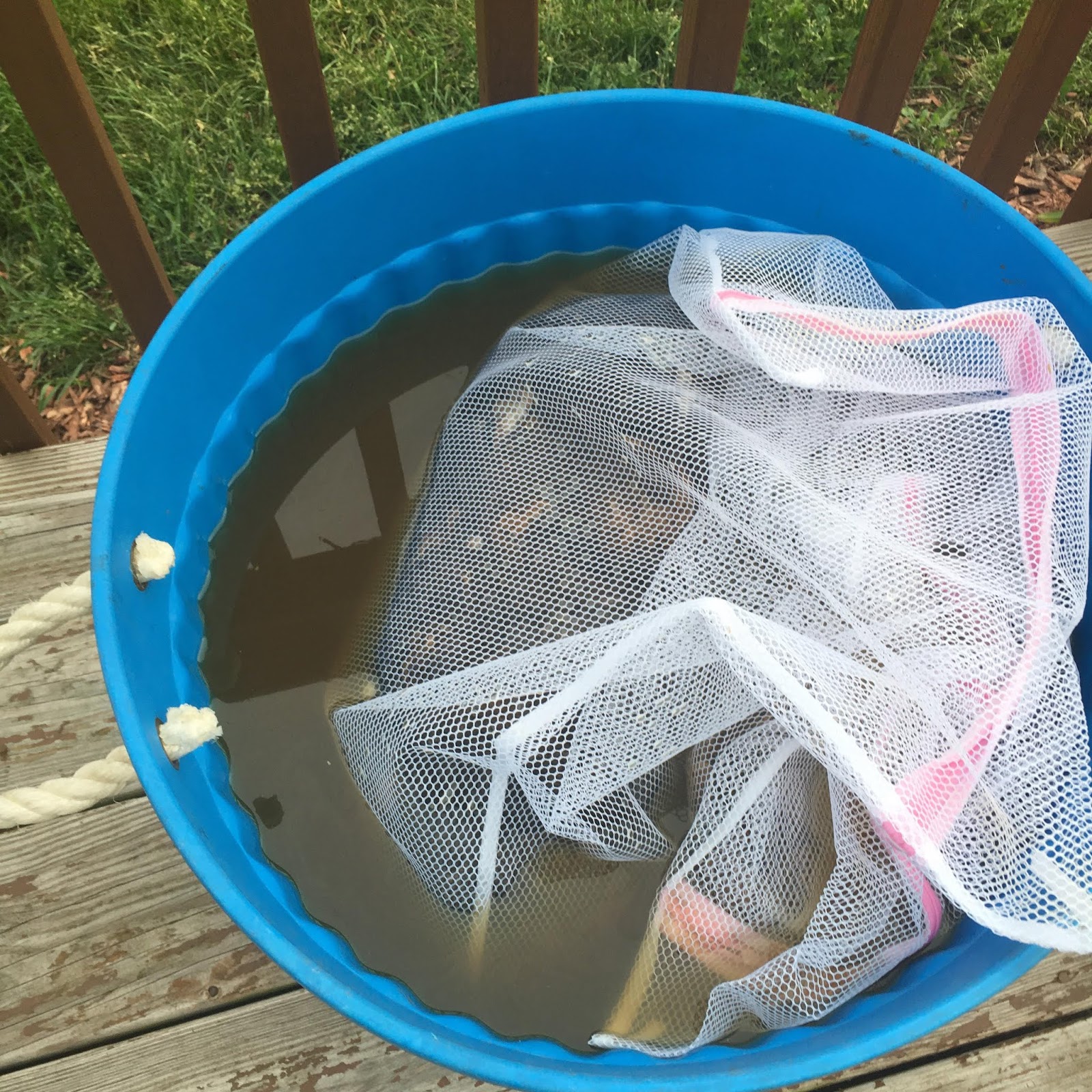 |
| Delicious… for the flowers. |
The first step when I wash is a cold water soak. I have a plastic tub that is placed on our back deck and filled with cold water. I put a few delicate bags of wool (my tub holds up to 2 lbs at a time) on top of the water and let them sink in as they absorb the water. I then cover the tub with a black plastic bag (solar energy, y’all!) and ignore it for 5-7 days. Covering the bin keeps birds (and inquisitive huskys…) out of the smelly soaking wool and using black helps to keep the water warm overnight when the temp drops. Soaking will help loosen up dirt, soften up VM and will help dissolve suint (the dirty, sticky sweat part of wool grease). Depending on the gross level of this fleece, I will sometimes dump the water, pull the bags out onto the deck, let as much gross water drain off as possible while refilling the tub with fresh cold water. I lay the bags back into the cold water and recover for a few more days of soaking.
Warning – when you uncover this tub – IT WILL SMELL SOMETHING AWFUL. You are liquefying the grossest gross here, so brace yourself. (Most gross? How come grosser sounds wrong but grossest sounds less so? ::shrugs::) And be glad this isn’t happening in your kitchen, right?! I started soaking after reading about the fermented suint method which is great if you are on limited water consumption, but takes a stronger stomach and more dedication than I have (also see note about inquisitive husky above). By doing a shorter cool soak, you are getting rid of the grossest of gross without your backyard smelling like a barn all summer, and without running the risk of any of the variables described failing on you and having to scour even after you ignored the barnyard smell on your patio all summer. The fermented suint method isn’t hard – and once you get things cooking, it sustains itself, but getting the conditions favorable can sometimes take a few tries. More info about this method is here.
After the wool has soaked a few days (or you remember it’s out there and gather the spoons to deal with it), I pour the water out and let the wool drain for a few minutes while I ready the sink for washing. Another reason for washing during the summer – the ambient temperature is already 80F+ so there’s not a risk of shock/felting when I take the wet wool from cold water to hot to scour.
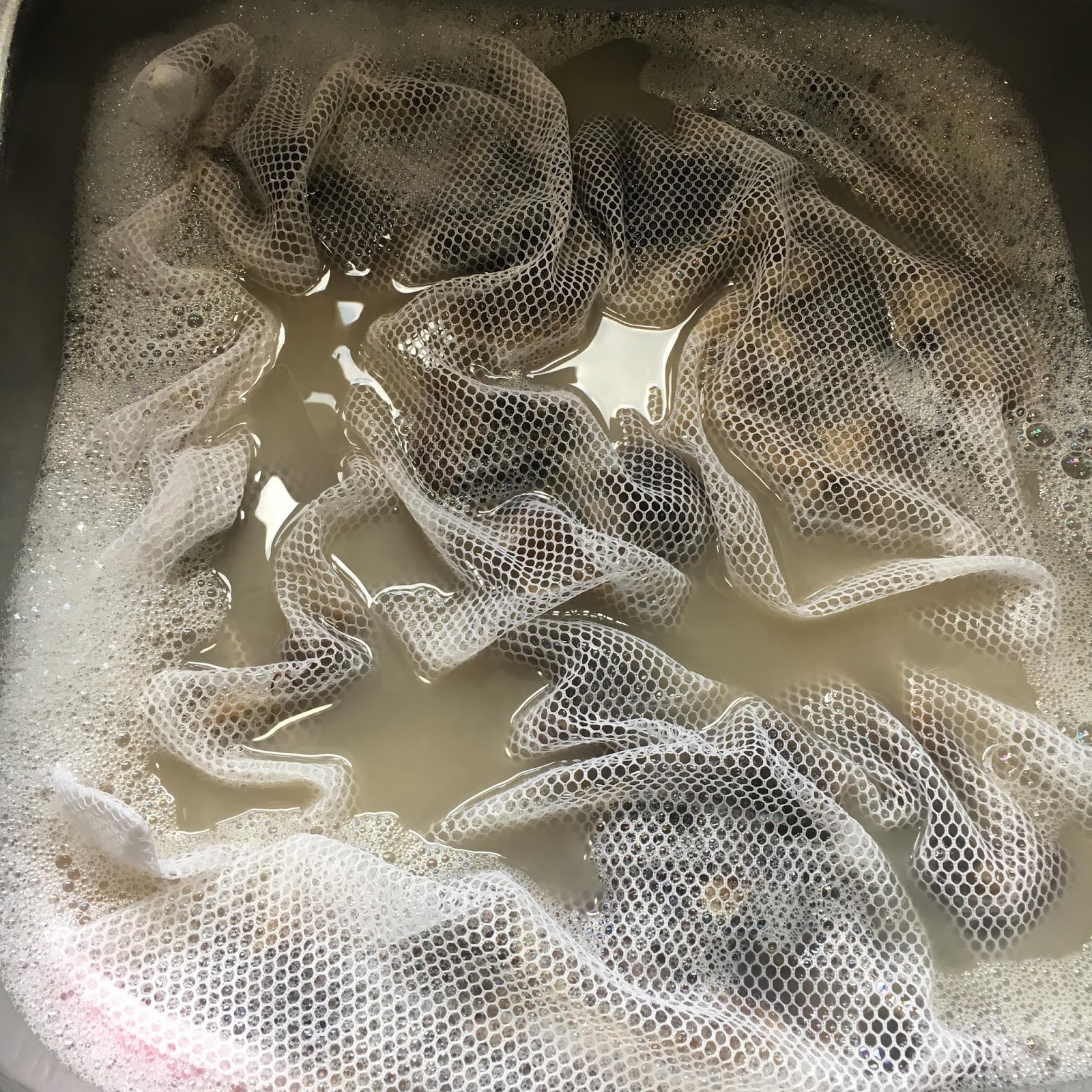 |
| Scouring wool from a dirty, greasy sheep |
Sadly, I don’t have a utility sink, which would be perfect for this type of thing. (Thanks for putting the plumbing DIRECTLY next to the electrical box, architect guy.) So I use the sink I have available. I move everything adjacent to cooking out of the way, scrub down the sink and counter tops, and run a sink full of water as hot as my tap will go. I add appropriate measures of Unicorn Power Scour for the water level and then add a bag of wool. Wearing dish washing gloves, I gently press the wool down into the hot water (I keep a separate pair for scouring/felting/fulling).
Don’t let the hot water run OVER the wool – it may felt the fleece.
Next, I set a timer – usually for 15-20 minutes – to come back and pull the wool out of the hot water. If you let the water cool too much, the lanolin will redeposit on the wool, which defeats the purpose of the hot wash water. When the timer rings, I gently move the bag out of the way to see the level of gross in the wash water and pull the sink stopper. Let gross water drain off, lift the bag of wool out, warm up the water flow until it’s at its hottest, replug the sink and repeat. I repeat this process until the water is mostly clear.
After the water is mostly clear, I rinse 1-2 times to get all of the soap out. I run warm water, lay the bag of wool into it and let it sit for 5-10 minutes. Repeat until I don’t get bubbles when draining or pressing the excess water out of the wool.
If I go more than 3 rounds in the scour, I finish with a warm rinse in Unicorn Fiber Rinse. This makes sure the soap is all out of the wool and gives the clean wool a nice, soft hand.
After the last rinse, I take the wool down to my spin dryer. I have this one, but when it dies, I will upgrade to this beauty! I place the bag of wool into the spin dryer and run it for 2-3 minutes, or until water stops streaming out of the drain tube. Then I take the wool out of the bag and spread it on a drying frame like this one to dry next to our dehumidifier. This way, the wool dries in less than a day!
My method is the combination of lots of reading, some trial and error and the limitations of my spoonie self and what we have on hand. It is, by no means, the end all. Definitely read far and wide and see what works best for you! My favorite scouring tutorial is by Beth Smith.
A note about lanolin in my pipes: If Beth is scouring 300 pounds of wool a year and putting that water down her drains without problems, I’m not gonna worry about my scant 1-2 fleeces a year.
Happy scouring & spinning!

 Donita Westman
1 thought on “How I get the gross out of raw fleece”